
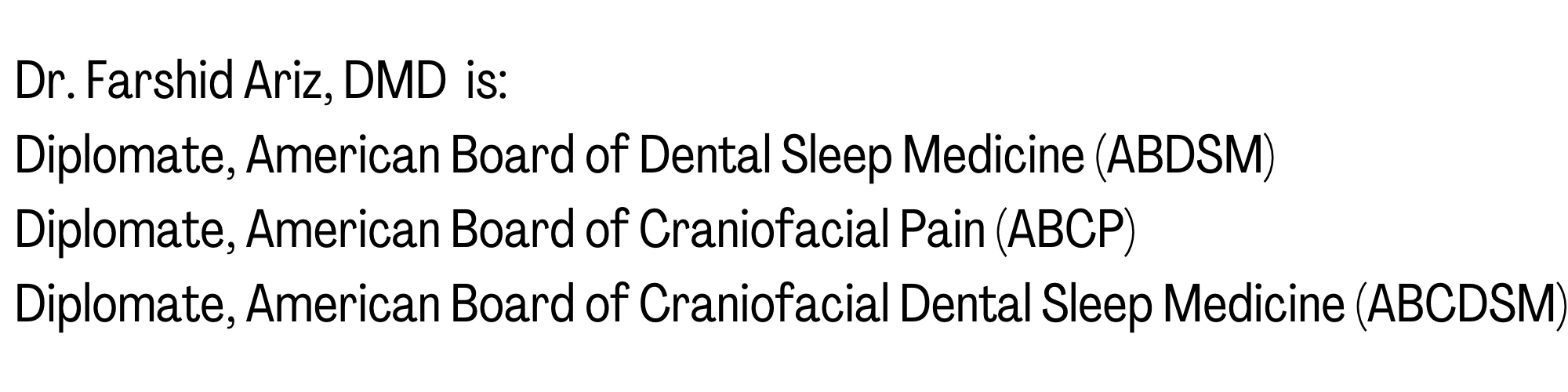

If you or someone you love has been diagnosed with obstructive sleep apnea, one of the first questions that comes to mind is simple: Is this forever? The good news is that for many patients, it does not have to be. I’m Dr. Farshid Ariz, DMD, a periodontist at the TMJ & Sleep Centre of San Fernando Valley in Brentwood, California. Every week I meet patients who want to know if they can cure sleep apnea or at least reduce it to the point where it no longer controls their life. The answer depends on several factors, but the outlook is genuinely encouraging.
Understanding Sleep Apnea and Why It Happens
Sleep apnea is a condition where your airway becomes partially or fully blocked while you sleep. Your brain wakes you up just enough to restart breathing. This cycle can repeat dozens — even hundreds — of times each night. The most common form is obstructive sleep apnea (OSA). It happens when the soft tissues of the throat collapse inward during sleep.
Several things raise your risk. Excess weight around the neck, a narrow airway, large tonsils, a recessed jaw, and even chronic nasal congestion can all play a role. Age and genetics matter too. But here is the key point: many of these factors are modifiable. That means the possibility to cure sleep apnea — or at least bring it into full remission — is real for a significant number of people.
Can You Actually Cure Sleep Apnea?
Let’s be honest and precise. Whether you can permanently eliminate sleep apnea depends on its root cause. For patients whose OSA is driven primarily by excess weight, studies show meaningful improvement is very achievable. A landmark study published in the British Medical Journal found that participants who lost an average of 10 percent of their body weight saw a 26 percent reduction in their apnea-hypopnea index (AHI) — the standard measure of sleep apnea severity. Some participants moved from moderate OSA to no clinically significant apnea at all.
For patients whose anatomy is the main driver — a small jaw, enlarged tonsils, or a deviated septum — surgical or dental interventions can produce lasting results. The point is that “cure” is not a one-size-fits-all word. For some, it means complete resolution. For others, it means managing the condition so effectively that symptoms disappear and health risks drop to near zero.
Weight Loss: The Most Powerful Lifestyle Change
If you carry extra weight, losing it is the single most impactful step you can take. Fat deposits around the upper airway narrow the breathing passage. When you reduce that tissue, the airway opens. According to the Sleep Foundation, roughly 70 percent of people with obstructive sleep apnea are overweight or obese, making weight management a frontline strategy.
Many of our patients in Brentwood and the greater Los Angeles area combine dietary changes with regular exercise. Even a modest weight loss of 10 to 15 pounds can produce noticeable improvements in sleep quality, snoring volume, and daytime energy. For mild cases, weight loss alone can effectively cure sleep apnea without any device or procedure.
Oral Appliance Therapy: A Comfortable Path Forward
At our practice, we frequently recommend custom oral appliances for patients with mild to moderate OSA. These devices look similar to a sports mouthguard. They gently reposition the lower jaw forward, which keeps the airway open during sleep. Patients love them because they are quiet, portable, and far easier to use than a CPAP machine.
Oral appliance therapy does not technically cure sleep apnea in the permanent sense. However, it can control the condition so completely that patients experience zero symptoms and their AHI drops to normal levels. For many people living in Encino, Sherman Oaks, and Brentwood, this approach offers freedom and simplicity. If you want to learn more about how airway health connects to jaw function, I encourage you to read our post on the connection between TMJ disorders and sleep apnea.
CPAP Therapy: The Gold Standard for Moderate to Severe Cases
Continuous positive airway pressure — CPAP — remains the most widely prescribed treatment for moderate to severe sleep apnea. The machine delivers a steady stream of air through a mask, keeping the airway open all night. It works extremely well when used consistently.
CPAP does not cure sleep apnea. It manages it. Think of it like eyeglasses for your breathing. When you wear the mask, you breathe normally. When you take it off, the obstruction can return. That said, many patients use CPAP while simultaneously working on the lifestyle changes that may eventually allow them to stop using the machine altogether.
Surgical Options That Offer Lasting Results
Surgery is typically reserved for cases where a clear anatomical problem is causing the obstruction. Common procedures include:
- Uvulopalatopharyngoplasty (UPPP): Removes excess tissue from the throat to widen the airway.
- Maxillomandibular advancement (MMA): Moves the upper and lower jaw forward to enlarge the airway space behind the tongue.
- Tonsillectomy and adenoidectomy: Especially effective in children and young adults with enlarged tonsils.
- Inspire therapy: A surgically implanted device that stimulates the hypoglossal nerve to keep the tongue from blocking the airway.
These procedures can produce long-term or even permanent resolution of sleep apnea for the right candidates. A thorough evaluation is essential to determine whether surgery makes sense for your specific situation.
Positional Therapy and Other Supportive Strategies
Some people experience apnea events only when sleeping on their back. This is called positional obstructive sleep apnea. For these patients, simply training themselves to sleep on their side — using special pillows or wearable devices — can dramatically reduce or even eliminate apnea episodes.
Other helpful strategies include avoiding alcohol before bed, quitting smoking, treating nasal allergies, and establishing a consistent sleep schedule. None of these alone will cure sleep apnea in most cases, but together they create a foundation that supports every other treatment. Our team discusses these habits in more detail in our post about how sleep apnea affects your daily life and long-term health.
Why Early Treatment Matters So Much
Untreated sleep apnea does more than make you tired. It raises your risk of high blood pressure, heart disease, stroke, type 2 diabetes, and depression. The longer it goes untreated, the harder those secondary conditions become to reverse. Early intervention gives you the best chance of achieving full remission — or an outright cure — before your body accumulates lasting damage.
If you suspect you have sleep apnea, please do not wait. A simple sleep study can confirm the diagnosis, and from there we can build a treatment plan tailored specifically to you.
The Bottom Line: Sleep Apnea Does Not Have to Be Forever
For many patients, sleep apnea is a highly treatable — and sometimes fully reversible — condition. Whether through weight loss, oral appliance therapy, surgery, or a combination of approaches, there is a real path toward sleeping soundly again. The key is identifying your specific cause and committing to a treatment plan. Our team in Brentwood is here to guide you through every step of that journey.
Frequently Asked Questions
Can sleep apnea go away on its own without treatment?
In most cases, sleep apnea does not resolve on its own. However, if the primary cause is excess weight, significant weight loss can reduce or eliminate apnea events entirely. Lifestyle changes are important, but a professional evaluation is the best first step to determine your specific situation.
Is it possible to permanently cure sleep apnea with surgery?
Yes, certain surgical procedures can permanently cure sleep apnea when a clear anatomical cause is identified. Maxillomandibular advancement and tonsillectomy are two examples that have shown lasting results. Your doctor will evaluate whether surgery is appropriate based on your anatomy and severity.
How much weight do I need to lose to cure sleep apnea?
Research suggests that losing as little as 10 percent of your body weight can meaningfully reduce sleep apnea severity. For some patients with mild OSA, this amount of weight loss is enough to bring the AHI into the normal range. Individual results vary, so working closely with your healthcare team is important.
Do oral appliances cure sleep apnea or just treat the symptoms?
Custom oral appliances treat the symptoms of sleep apnea by holding the jaw in a forward position to keep the airway open during sleep. They do not permanently alter your anatomy, so symptoms can return if the device is not used. Many patients find oral appliances to be a comfortable and effective long-term management solution.
What happens if I stop using my CPAP machine after my sleep apnea improves?
If your sleep apnea has improved due to weight loss or another intervention, your doctor may recommend a follow-up sleep study to see if CPAP is still necessary. Stopping CPAP without medical guidance can cause apnea events to return. Always consult your sleep specialist before making changes to your treatment plan.
Written by: Dr. Farshid Ariz, DMD — Periodontist, TMJ & Sleep Centre of San Fernando Valley, Brentwood, California